

Teaching Global Citizenship: The World Cup Can Teach Children Beyond Sports

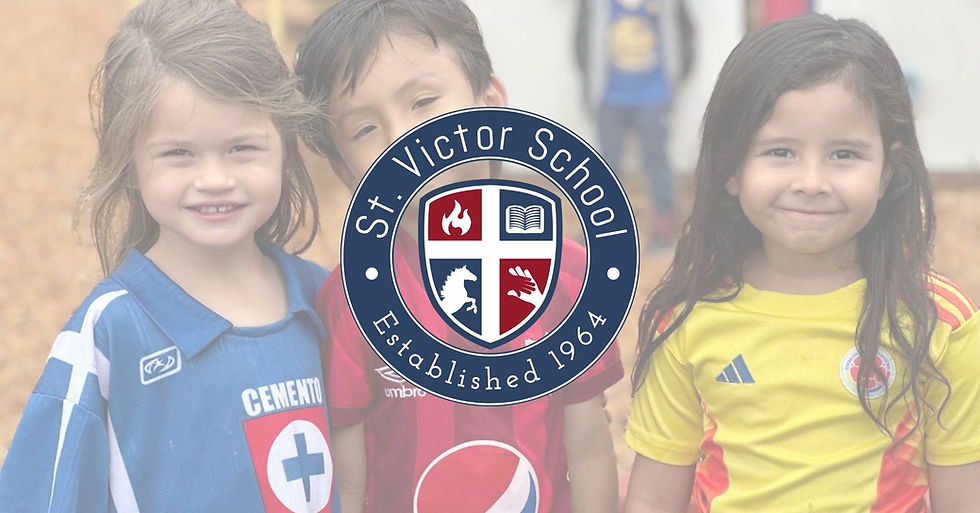
Every four years, the World Cup captures the attention of families around the globe. People cheer for their home countries, learn the names of players from places they may never have visited, and gather around a shared love of the game.
For children, the World Cup offers something even more meaningful than exciting matches and memorable moments. It creates a natural opportunity for teaching global citizenship.
At St. Victor School, we believe education extends beyond academics. We are preparing students to become children of faith, lifelong learners, and caring and responsible citizens. Events like the World Cup remind us that some of the most valuable lessons children learn happen when they begin to notice, question, and connect with the world around them.
Learning Global Citizenship Beyond the Classroom
Some of the best learning begins with curiosity.
A child who starts by cheering for a team may soon ask, “Where is that country?” or “What language do they speak?” or “Why are people celebrating that way?” These simple questions can open the door to conversations about geography, language, culture, history, and tradition.
That kind of learning is powerful because it feels connected to real life. Students begin to see that the world is wider than what they already know and that there is joy in discovering more about it.
At St. Victor, we know meaningful learning does not only happen through textbooks or tests. It happens when students make connections between what they are learning and the world around them. Whether they are studying a new place in social studies, reading a story from a different perspective, participating in a school tradition, or asking a question sparked by something they saw at home, students are learning how to be curious, thoughtful, and engaged.
Teaching global citizenship begins with that curiosity. It begins when children learn to ask good questions, listen with openness, and understand that the world is full of people, places, and stories worth knowing.
Celebrating Culture and Community
One of the most beautiful parts of the World Cup is the way it celebrates both diversity and unity. Each country brings its own flag, language, traditions, songs, and celebrations. Yet people around the world come together to share the same excitement, hope, joy, and sometimes disappointment.
That balance is an important lesson for children.
At St. Victor School, our community is made up of families with many different backgrounds, cultures, and traditions. Throughout the year, students have opportunities to celebrate, learn from, and honor one another’s heritage through classroom learning, school traditions, faith formation, and community events.
When children are encouraged to appreciate the cultures and experiences of others, they begin to understand that differences are not something to fear. They are something to respect, learn from, and celebrate.
Teaching global citizenship is not only about learning facts about other countries. It is about helping students see the dignity and value of every person. It is about forming children who can recognize what makes each person unique while also understanding what connects us as members of one human family.
Teamwork, Perseverance, and Respect
The World Cup also highlights lessons that go far beyond the soccer field.
No team succeeds alone. Players rely on one another, communicate, make sacrifices, and work toward a shared goal. They practice for years, face setbacks, recover from mistakes, and continue forward even when the outcome is uncertain.
Children can see those same lessons in their own lives.
Whether students are working together on a class project, participating in athletics, serving their community, playing at recess, or learning how to resolve conflict with kindness, they are practicing the skills of teamwork, perseverance, and respect.
At St. Victor, these moments are part of character formation. Students learn that leadership is not only about being first or being the loudest voice in the room. Leadership also means listening, encouraging others, doing your part, and treating people with respect.
Even in competition, there is room for humility and grace. Even after disappointment, there is room to grow. These are lessons children carry with them long after a game, a project, or a school year ends.
Preparing Students for a Connected World
Our students are growing up in a world where they will meet, work with, and learn from people with many different experiences, cultures, perspectives, and beliefs. Helping children develop empathy, curiosity, and respect prepares them not only for school, but for life.
Teaching global citizenship helps students understand that they are part of something larger than themselves. They belong to a classroom, a school community, a faith community, and a wider world.
At St. Victor, students are known, supported, and encouraged to grow. They are also taught to recognize the dignity of others and to understand that their choices matter. Through faith, learning, service, and community, students begin to see that they have a responsibility to care for others and contribute to the world around them.
That is the heart of teaching global citizenship.
Charger Today. Leader Tomorrow. Christ Always.
Long after the final World Cup match is played and the trophy is lifted, the lessons remain.
Children may remember the goals, the flags, or the teams they cheered for, but they can also carry with them something deeper: curiosity about the world, appreciation for different cultures, respect for others, and an understanding that teamwork matters.
At St. Victor School, we are forming students who are prepared to learn with curiosity, lead with compassion, and serve with love. As our motto reminds us, they are Charger today. Leader tomorrow. Christ always.
And in a connected world, those lessons matter more than ever.

Comments